
Contrast in Branding & Marketing Matters


Branding Contrast Accessibility
When it comes to branding, design decisions often focus on aesthetics… what looks modern, fresh or eye-catching. But there’s another factor that matters just as much, if not more, and that’s accessibility.
Take a look at this example:
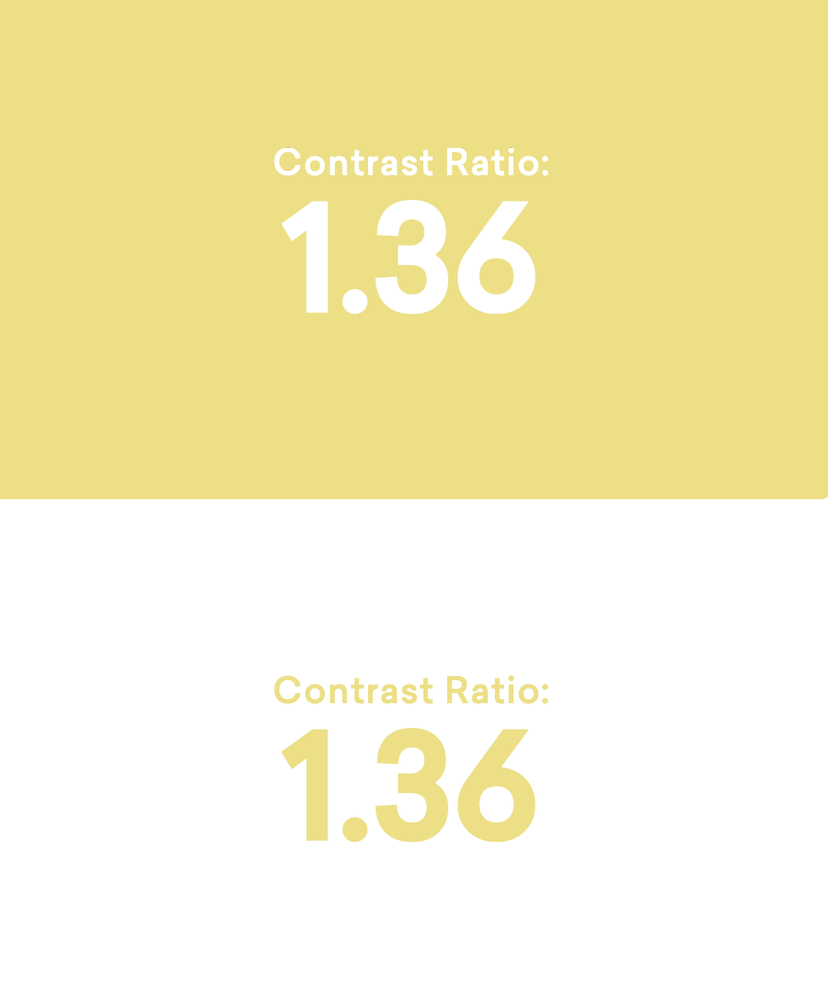
A pale yellow paired with white: Contrast ratio 1.36
On screen, this color might look cheerful, but it falls drastically below accessibility standards. Esto es un problema.
In many of my blog posts, it’s mentioned that according to the Web Content Accessibility Guidelines (WCAG):
- Normal text should meet a contrast ratio of at least 4.5:1.
- Large text (14pt or 18pt bold and above) should meet at least 3:1.
And there are tools out there to help!
That means these “revamped” brand colors don’t just miss the mark, they aren’t even close. Low-contrast colors may look stylish on a mock-up, but in practice: On an acknowledgment letter, they’ll barely show up, especially if printed. On small formats like business cards or social media avatars, they become hard to read even for people with perfect vision.
For people with low vision, older adults or anyone in your audience who doesn’t have 20/20 eyesight, they can be nearly impossible to read.
If your organization serves vulnerable or diverse populations, ignoring branding contrast accessibility in something as fundamental as your branding sends the wrong message.
This is just one example of why it matters who has a seat at the table when marketing and branding decisions are made. A strong, inclusive brand looks good when it works for everyone.
By making accessibility part of the conversation from the start, organizations ensure that their brand reflects their values and truly reaches the people they serve. Have questions or want a quick test your color palette? Email hello@deramocreative.com today!